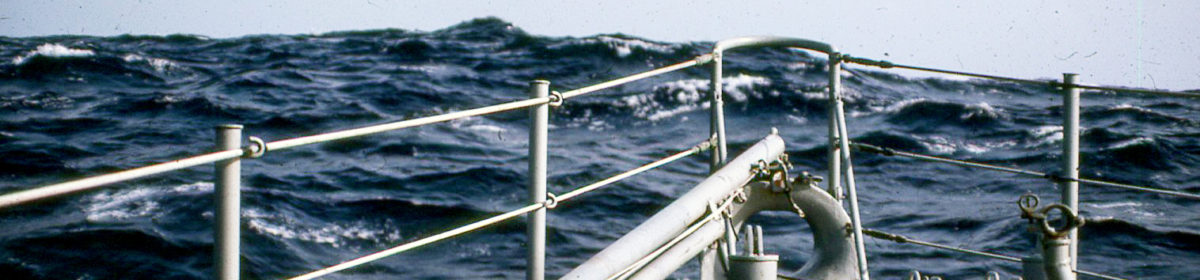
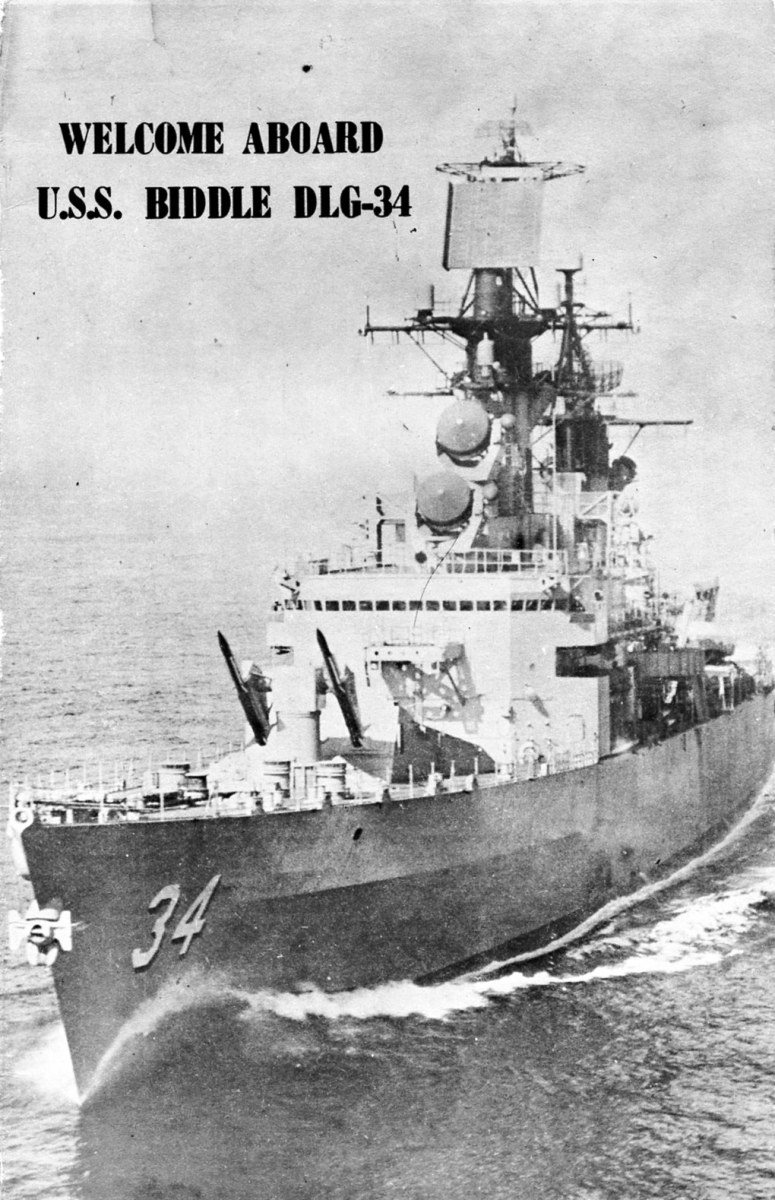
Memories of my first few weeks aboard the Biddle, tied up to one of the D&S piers in Norfolk, are not particularly clear, especially in details. (I kept a daily journal during the 26 May-21 December deployment, so that should at least allow some details.) My interaction with enlisted personnel was very limited because I wasn’t really doing anything yet, but I did interact with some of the officers, all but a very few holding higher rank.

I already mentioned I met the Captain for a “new officer” talk. I expect I also talked with the Executive Officer, CDR Allen Smith III. I thought of him as somewhat patrician, maybe because of the III in his name. He may have been very personable, but to me, the boot ensign, he was XO, a Commander, second only to the near deity who was my Captain.
I was assigned at some point to the OI Division in the Operations Department. As I had mentioned and as I will relate below, I was an “add-on,” not one of the regularly assigned officers to a ship like the Biddle. I was a “special duty officer,” unable to be assigned to ship-driving and other duties “normal” line officers would undertake. The Operations Department Head at the time was LCDR Steinbrink and my division officer was LT Grey Libbey.


. . . and a gentleman
These days aboard Biddle were my first experience with life as a Navy Officer . . . and it was pretty nice. OCS was officer “boot camp” and, after commissioning, I had lived in an off-base apartment in Norfolk while attending Intelligence and CIC training. I ate breakfast and dinner off-base. On the Biddle, I was assigned a stateroom. As an ensign, my stateroom was in the junior officer group a couple/three decks below the weather deck, near or below the water line, aft. These were two-officer units, with two bunks, above and below, along the exterior bulkhead; side-by-side compartments providing space for clothing and built-in, drop-down “desks” along an interior bulkhead; and two(?) sinks and mirrors on the opposite bulkhead. (Oh, the color scheme was grey.) There was a communal head (bathroom and showers) nearby.
Even better, I may have been alone in my stateroom initially. Those times underway when I lived in a stateroom, my roommate was a “spook,” the officer in charge of a contingent of linguists who listened to North Vietnamese communications. But until we picked up a Destroyer Squadron staff and/or the spooks, which added to the total number of officers, I may have lucked out in a single.
My clothes were laundered, my bed made, and my quarters cleaned by stewards, exclusively at the time Filipino citizens who were able to serve in the US Navy in that capacity. (Soon thereafter, in early 1971, Filipinos were recruited not only for steward duty, but for any Navy rating for which they would qualify.)
Stewards also cooked and served the food provided officers in the ship’s wardroom. The officers’ wardroom was a combination dining room and man cave. In addition to a long table athwartship to accommodate all the officers on board, there were a couple of smaller tables and couches with coffee tables for TV viewing. Under normal, in-port routine, the wardroom offered breakfast, lunch, and dinner to officers during designated periods. One could also drop by for additional refreshments, as at least one steward was always on duty.
A bright, shiny object
Several times during these first weeks, I was approached by a member of the duty section and told the Captain requested my presence in his quarters. The first time that happened, I was quite concerned. Had my efforts to be as “invisible” as possible backfired and caused complaint?
I was very nervous the first time I received that “invitation” and knocked on his door. On that occasion and several more, I was “shown off” to visiting friends of the Captain or superior officers as some sort of “trophy.” “Admiral, I want you to meet our Intelligence Officer. We are one of a very few Destroyer Leaders to have an officer with an Intelligence designator assigned” or something like that. Meanwhile, I, a 22-year-old nerd of historic proportions but slight physical stature, tried to appear manly and officer-like and answer questions without too much stammering or drooling.
Only nine days to go before we (50 years ago) deploy. Next post will be about time with Captain Olsen.



 Michael D. McCance was from Las Vegas, Nevada, and came to OCS after graduating from the University of Nevada.
 The Coast Guard said there was no explanation of why the two men were missing or why the boat should have sunk as there was no indication of damage to the 25-foot craft.


 I, [name], do solemnly swear that I will support and defend the Constitution of the United States against all enemies, foreign and domestic; that I will bear true faith and allegiance to the same; that I take this obligation freely, without any mental reservation or purpose of evasion; and that I will well and faithfully discharge the duties of the office on which I am about to enter. So help me God.

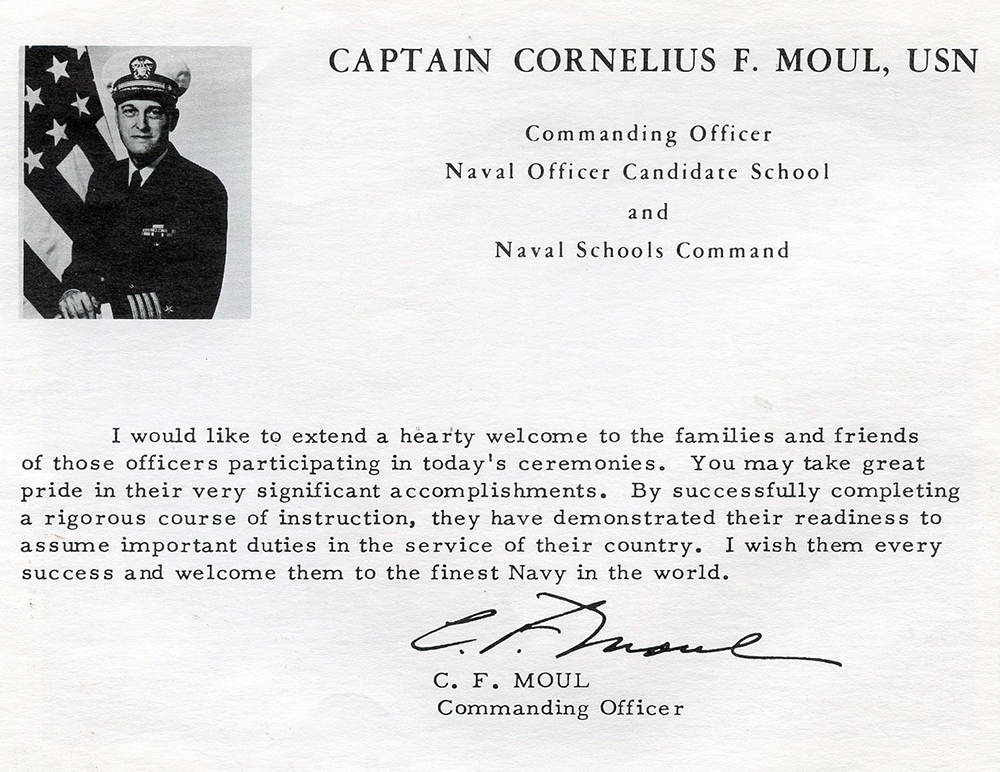
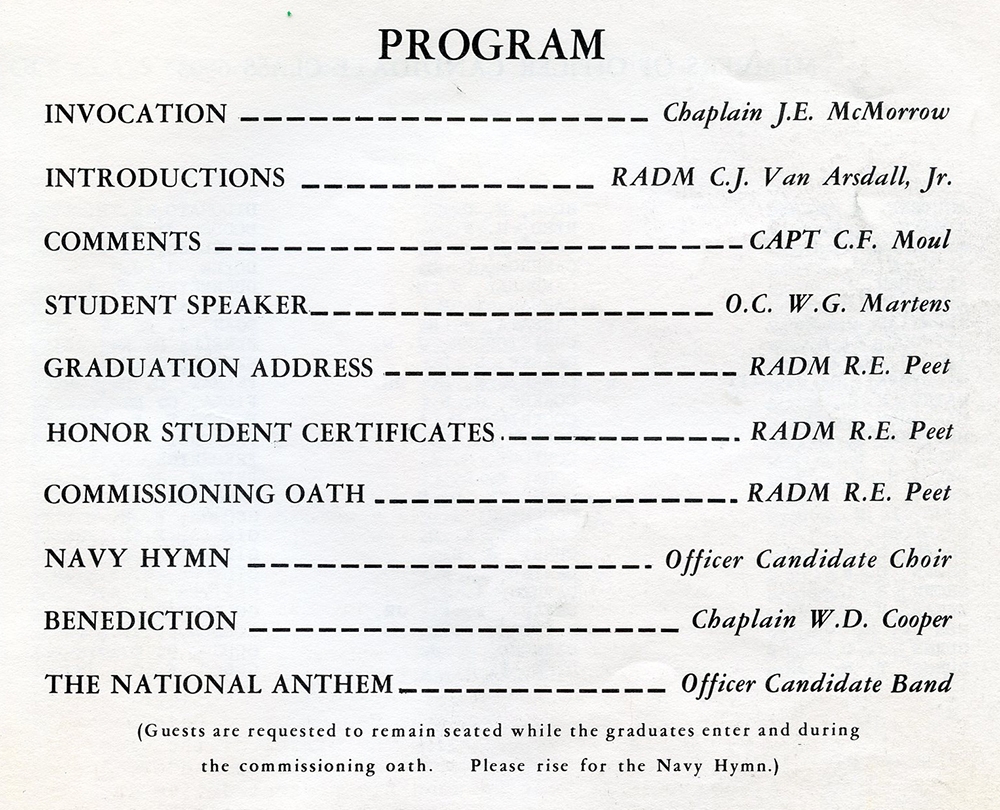
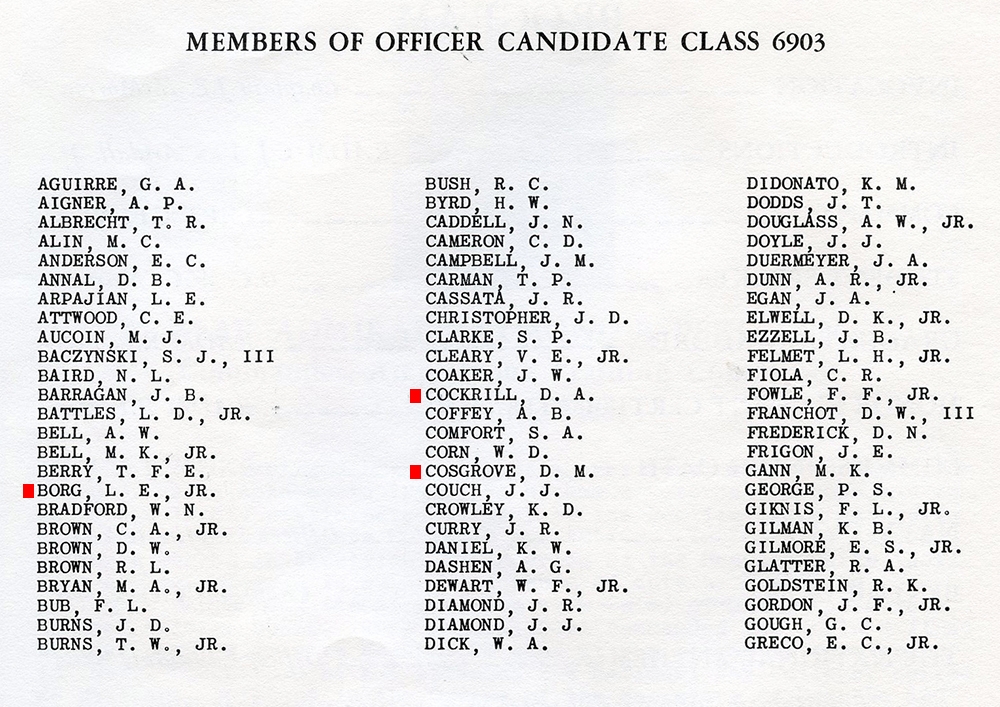
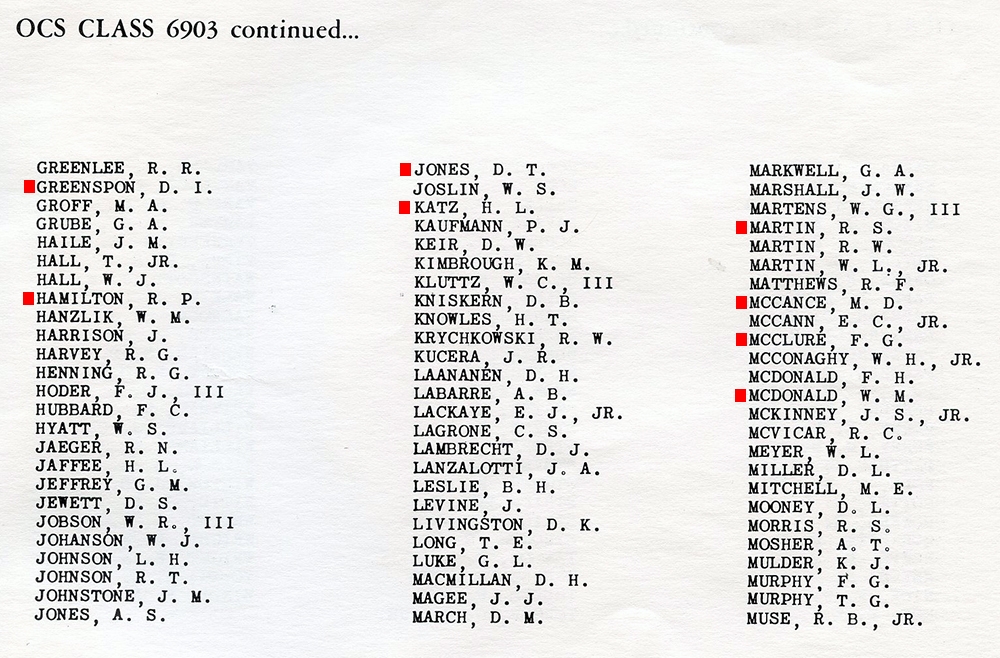
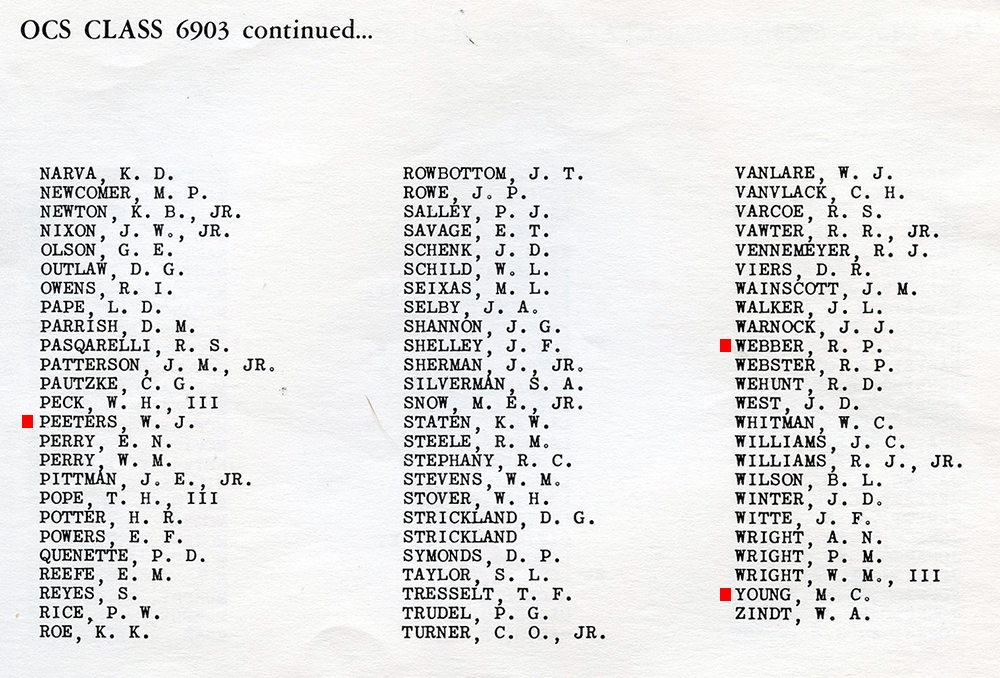


 At right is my commission. Under the title “The President of the United States of America” and the Seal of the United States, it reads: “To all who shall see these presents, greeting: Know Ye, that reposing special trust and confidence in the patriotism, valor, fidelity and abilities of William Michael McDonald I do appoint him a Reserve Officer in the grade of Ensign, Special Duty (Intelligence) United States Navy to rank as such from the Fourteenth day of February, nineteen hundred and Sixty-Nine. This Officer will therefore carefully and diligently discharge the duties of the office to which appointed by doing and performing all manner of things thereunto belonging. And I do strictly charge and require these Officers and other personnel of lesser rank to render such obedience is as due an officer of this grade and position. And this Officer is to observe and follow such orders and directions from time to time as may be given by me or the future President of the United States of America or other Superior Officers acting in accordance with the laws of the United States of America. This commission is to continue in force during the pleasure of the President of the United States of America for the time being, under the provisions of those public laws relating to Officers of the Armed Forces of the United States of America and the component thereof in which this appointment is made. Done at the City of Washington, this Second day of December in the year of our Lord one thousand nine hundred and Sixty-Eight, and of the Independence of the United States of America the one hundred and Ninety-Third. — Effective: Date Accepted — By the President: Charles K. Duncan Vice Admiral, U.S. Navy Chief of Naval Personnel — Paul R. Ignatius Secretary of the Navy.”

 The picture above shows action outdoors. I remember being on a hose crew advancing toward fire inside a structure (USS Buttercup?). My strongest memory is that I tried something I believe we were told prior to the exercise. I recall we were told that you could extract oxygen from the water in the hose through the surface of the hose by affixing your lips to the hose and breathing in. That seemed implausible, but I tried it during the exercise, when the smoke was particularly heavy, and I remember it being effective. (This also could well have been a joke pulled by NAVOCS enlisted, figuring some dumbass OCUI would try it.) I have seen nothing online since to support the notion that one can do this. Again, I’m thankful I never had to resort to it.
 One of our perhaps least favorite evolutions was inoculation. Shots. Periodically, we would go en masse to a location where Navy corpsmen, armed with “jet injectors,” would immunize us against a wide variety of diseases. Yellow fever, rubella, mumps, flu, etc. I remember feeling a bit disquieted when I saw that I was being inoculated against plague. Where would the Navy send me that I would need protection against plague?!

 The “O Course” at NAVOCS was pretty traditional, as I recall. I doubt I was proficient at it, especially early, but I don’t remember being stymied by any particular part of it. I’m not saying I liked it, but I don’t recall it as a real nemesis. We also probably had limited access to it, because winter made conditions very different from those in photo at right.